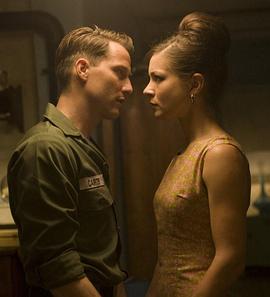
Bayern, 1965. Kaum ein Jahrzehnt hat Deutschland gesellschaftlich so revolutioniert wie die sechziger Jahre. Der Kalte Krieg beherrschte das politische Klima, der Minirock eroberte die Mode, und die Beatles machten dem heimischen Schlager Konkurrenz. Von all dem unberührt scheint das bayerische Dorf Lehrbach - bis zu dem Tag, als Julia Welling (Henriette Richter-Röhl) auftaucht, um im Auftrag der katholischen Kirche ein Kinderheim aufzubauen. Ihre modernen pädagogischen Erziehungsmethoden und ihre emanzipierte Art passen so gar nicht zum traditionellen Familienbild, das auf dem Land noch immer herrscht. Dort hat der Mann das Sagen, gehört die Frau an den Herd und gelten Kinder vor allem als billige Arbeitskräfte in der Landwirtschaft. Kein Wunder, dass nicht nur die Bauern, sondern auch Pfarrer Weber (Andreas Lust) und Bürgermeister Huber (Stephan Zinner) nicht gut auf die zugereiste Städterin zu sprechen sind. Schließlich setzt sich Julia über ihre Pläne hinweg und kauft statt der alten Gerberei eine leerstehende Kaserne der amerikanischen Truppen, um darin das Kinderheim einzurichten. Unerwartete Unterstützung erhält Julia von David Carter (David Rott). Der US-Major wickelt die Auflösung des Militärstandortes in Lehrbach ab und ist von Julias Selbstbewusstsein fasziniert. Doch die Sympathie, die beide für einander empfinden, wird schon bald von Julias Zweifel überschattet, ob ihre Liebe eine Chance haben kann. Denn als Soldat verkörpert David alles, was Julia ablehnt
In 1828, the bankrupt Pyncheon family fight over Seven Gables, the ancestral mansion. To obtain the house, Jaffrey Pyncheon obtains his brother Clifford's false conviction for murder. Hepzibah, Clifford's sweet fiancée, patiently waits twenty years for his release, whereupon Clifford and his former cellmate, abolitionist Matthew, have a certain scheme in mind.
A young woman is found unconscious in a city street - claims to be another person who was brutally murdered two months earlier - escapes from a psychiatric hospital in order to prove her identity and find the truth about her life, her death, and her murderer.
On a class trip, five friends are kidnapped by an evil doomsday cult seeking to achieve immortality with an ancient pagan artifact – and who will stop at nothing to do it... Berlin students Ben, Jonas, Leo, Ozzi and Sophie are on a class trip to boring Hildesheim. Their schedule includes visiting the medieval cathedral and witnessing a complete solar eclipse, but destiny intervenes… A bomb goes off at the cathedral and the students are evacuated by the police, only to find themselves in the clutches of an occult secret society calling themselves the Lunaris Cult, who aim to use an ancient pagan artifact, the Irminsul, to harness the vital force of their teenage captives and use it for their own purposes on the eclipse. The evil cultists are after immortality and divine power, and are even prepared to sacrifice the friends' lives. Ben and his gang manages to escape. Chased from one danger to the next, the cultists pursue them, closing in on them more and more. The fanatics have it all planned out, it seems, leaving nothing to chance. They disable the cell phone networks and satellite connections, leaving the friends to fend for themselves …
Set during the last days of the civil war that followed the Russian Revolution. The Crimea Peninsula is the last stronghold of the White Guard, and the Red Army is planning the final assault. The first story line of the movie follows two Red Army soldiers unlikely friends Nekrasov and Karyakin. The second story line is about a White Guard officer Brusentsov who is devoted to Russia and his cause but sees it being destroyed day by day.
The history of Danish country church architecture is told by showing scenes of how the church was used by the congregation, beginning with the celebration of mass in a small and simple wooden church 800 years ago, and ending with the congregation singing in a village church of to-day. The development and the growth of the pattern of church architecture is shown. Dreyer in this film shows a series of churches from different periods with churchgoers in period clothing. Each period is separated by a shot of a church bell double-exposed on the sky. Although the film has a vibrant and instructive way of communicating the different epochs and styles to students, it does not exhibit the artistic quality that usually distinguishes a Dreyer film, except perhaps in some of the costumes, which were originally made for Day of Wrath. The board of Dansk Kulturfilm in autumn 1945 decided that their planned church film would exclusively be about village churches. Dreyer would rework the script that was written by editor and folk high-school principal Bernhard Jensen, aided by a committee of experts consisting of architect H. Lønborg-Jensen and Victor Hermansen, curator at the National Museum of Denmark. Dreyer had a first draft ready in mid-March, entitled Kirken er et gammelt Hus (The Church Is an Old House), which was distributed to the members of the committee for their comments. In the last half of July, Dreyer and Victor Hermansen travelled the country to look at suitable churches. They researched the details and at Dreyer’s request a number of technical changes were made to the churches, including the removal of porcelain holders for electrical wiring in Tveje Merløse Church. On 4 July, Dreyer went in advance to Ringkøbing. Shooting was set to start a few days later with the arrival of the director of photography, Preben Frank, who had fallen off a ladder and broken his leg, Fortunately, he was ready to cautiously start working again within a few days, with his leg in a cast. Otherwise, the production went without a glitch. Everywhere, Dreyer said, they were well received at the vicarages and they had no problem getting enough extras. On 1 august, they returned to Copenhagen with almost all their footage in the can. They only needed to film the church in Skelby, where the weather had been against them, plus a Swedish wooden church in Hedared. The economy was distressed so soon after the war, especially when it came to foreign currency, but there were no real wooden churches left in Denmark and building an interior set in the studio would be too expensive. The finished film was shown for the first time on 24 September 1947 to a small, closed circle, which included the Minister for Ecclesiastical Affairs. In December 1947, as was Dansk Kulturfilm’s standard practice, the film was presented to the press, politicians and others on a programme with four other short films.
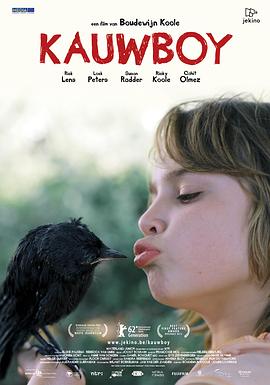
男孩乔乔(里克·伦斯 Rick Lens 饰)的童年是灰色的,母亲不在身边,对其思念至极的乔乔只能每天通过电话听一听她亲切的声音。乔乔的父亲是个粗暴的男人,他不仅无法给予乔乔他所渴望的父爱,还因为一些生活中的小事对儿子肆意打骂。 一次偶然中,乔乔在树下拾得了一只从窝里跌落的雏鸟,在雏鸟的身上,乔乔看到了自己的影子。爱心和责任感让乔乔将雏鸟视为自己的孩子,无微不至地照顾着它,保护着它,对于儿子的举动,乔乔的父亲大为火光,无奈之下,乔乔只得将雏鸟藏在床下。之后,乔乔结识了名为彦瑟(苏珊·拉德尔 Susan Radder 饰)的女孩,就这样,雏鸟有了自己的“妈妈”。
A story about four children living in a Mumbai slum in India. An eight-year old Kanhu writes a letter to the Prime Minister after a dramatic incident with his mother. A small boy has to achieve the impossible.